September 16, 2026
Pickleball Terms and Nicknames Every Beginner Should Know
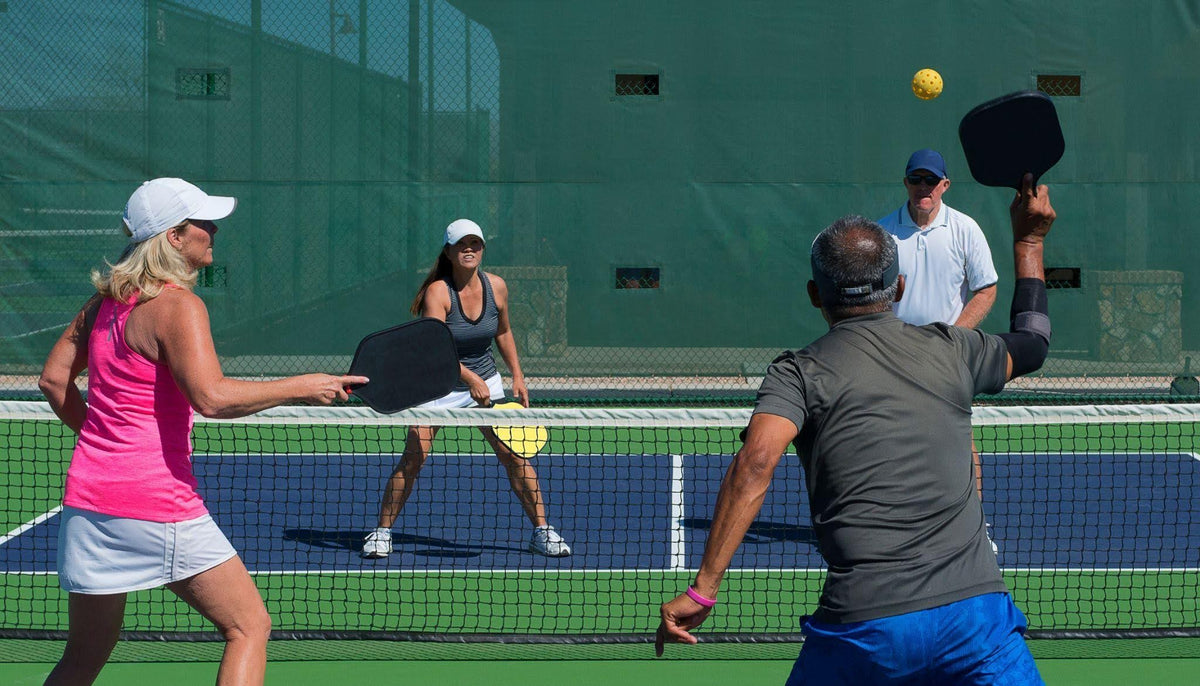
Your first pickleball game comes with a second language.
Someone yells, "dink."
Someone else groans about the kitchen.
And a stranger says you got pickled.
This guide covers essential pickleball terms and the pickleball names players use for shots and styles of play, along with the slang you'll hear between games. You'll learn what each word means, how to use it, and which ones matter on day one.
Read it once before you play. It makes the first game calmer, and the second one more fun. Before you know it, pickleball will become your favorite game worth celebrating.
Table of contents
What beginners should know first
Step-by-step: learning the language
Why does the vocabulary matter
Mistakes beginners should avoid
Recommended tools and products
Celebrate the player in your life with Pickleball Candle

What beginners should know first
The terms in pickleball fall into three groups: court terms, shot names, and player nicknames. Once you can sort a word into one of those, it stops feeling like jargon.
Pickleball court terms describe where you stand and what the rules allow.
The kitchen is the seven-foot non-volley zone on each side of the net. You can't volley there, though you can step in to play a ball that has already bounced. A volley is any shot hit before the ball bounces.
The two-bounce rule says the serve and the return must both bounce before anyone volleys. A fault is any violation that ends the rally. A side-out occurs when the serving team loses the rally, and the serve passes to the other team.
Pickleball names for shots describe what the ball is doing.
-
A dink is a soft shot that lands in the opponent's kitchen.
-
A drop is a soft shot from the back of the court that lets your team move forward.
-
A drive is hard and low.
-
A lob goes high and deep.
-
A smash is a downward swing at a high ball.
-
An Erne is a volley hit outside the kitchen after jumping or stepping around it.
-
An ATP, short for around the post, sends the ball around the net post instead of over it.
Player nicknames are the fun part. A banger hits everything hard. A dinker prefers patience. A poacher steals shots meant for a partner. To pickle someone is to beat them 11-0.
Step-by-step: learning the language
Work through these pickleball terms in order. Each step builds on the last.
-
Start with the kitchen. Find the line seven feet from the net. Stay behind it when you volley.
-
Learn the serve rules. Serve underhand and diagonally. Let the serve and the return bounce before you volley.
-
Practice the dink. Stand near the kitchen line and trade soft shots with a partner. It's the shot you'll hit most.
-
Learn the score call. Doubles calls use three numbers: your team's score, the opponent's score, and server one or two. A call of "4-2-1" makes sense once you say it out loud.
-
Add shot names as you go. Learn drop, drive, and lob first. Save the Erne and ATP for later.
-
Listen to the court. Players call "mine," "yours," "out," and "bounce it." You'll pick these up by playing.
A first day at the court
Picture a first Saturday at a public park. You join a four-person game. The serve comes over, you let it bounce, and your partner calls "bounce it." You know that one. The return lands in the kitchen, and you answer with a dink.
Later, a ball drops near the net, and your partner realizes they stepped into the kitchen mid-volley. They call the fault on themselves. Nobody argues. The game keeps moving. That is why pickleball court terms matter. They keep playing fast and friendly.
Pickleball names for playing styles work the same way. A friend jokes that you're becoming a dinker. Another says the group on court three are all bangers. Neither is an insult. They're shorthand, and most players wear the label with pride.
It’s the same concept, whether it’s a small game or a multiplayer event celebrating a birthday party.

Why does the vocabulary matter?
Knowing the terms in pickleball makes you a better partner. It also reduces rule disputes, since many early faults stem from a small set of rules that all have names. The vocabulary helps you belong, too. A new player who can say "side out" or "my serve" settles in faster than one who stays quiet.
Mistakes beginners should avoid
A few mistakes show up often in beginner games.
-
Volleying from inside the kitchen: stay behind the line unless the ball has already bounced.
-
Skipping the two-bounce rule and hitting the return out of the air.
-
Mixing up a dink and a drop: A dink is played near the net, and a drop comes from the back of the court.
-
Treating nicknames as insults: Pickleball names like banger and dinker are only descriptions.
-
Mishearing the score, so say all three numbers clearly before every serve.
-
Trying to learn everything at once: Focus on five core pickleball terms first and let the rest arrive.
Pickleball by the numbers
Pickleball's vocabulary is spreading because the game is. The Sports & Fitness Industry Association (SFIA) reports that 24.3 million Americans played pickleball in 2025, up from 4.2 million in 2020.
Women now make up 42.9% of players, up from 38.6% in 2020, and teens and young adults ages 13–24 posted the highest participation rate of any age group.
Recommended tools and products
A few simple tools make learning easier.
-
A beginner paddle with moderate weight gives you control while you learn the dink.
-
Court shoes protect your ankles near the kitchen line.
-
A pocket rules card listing pickleball court terms settles debates fast, as does a saved copy of the USA Pickleball rulebook on your phone.
-
Bring outdoor balls for outdoor courts and indoor balls for gyms.
-
Jot down words you hear and look them up after the game.
FAQ
Q: Which words should beginners learn first?
Start with kitchen, dink, volley, fault, and side out. Add the two-bounce rule and the score call, and you can follow almost any beginner game. Shot names like drop, drive, and lob come next, followed by nicknames and slang you'll pick up naturally by playing.
Q: What is the kitchen in pickleball?
The kitchen is the non-volley zone, a seven-foot area on each side of the net. You can't hit the ball out of the air while standing on it or touching its lines. You can enter to play a ball that has already bounced.
Q: What does it mean to get pickled?
Getting pickled means losing a game 11-0, without scoring a single point. It's a playful term, not an insult. Winners usually keep it low-key, with a friendly paddle tap, and losers usually laugh it off and ask for a rematch.
Q: What is the difference between a dink and a drop?
A dink is a soft shot hit from near the kitchen that lands in the opponent's kitchen. A drop is a soft shot hit from the back of the court, usually on the third shot, that lets your team move forward. Both are soft, but they come from different positions.
Q: Where can beginners learn more court vocabulary?
The USA Pickleball rulebook defines the official terms and rules. Beyond that, playing is the best teacher. Ask questions during open play, since most players enjoy explaining the game. Keep a short list of words you hear, and look them up afterward.

Celebrate the player in your life with Pickleball Candle
Someone you know already plays. They have a paddle in the trunk, a Saturday game, and a story about the point they almost won. You don't need to say much. A candle from Pickleball Candle says it well.
It's a small, quiet way to celebrate the friend who loves the game, whether they've played for years or recently learned what the kitchen is. Light it after a long session, and it becomes part of the ritual. The game ends, the paddles come off the court, and the evening slows down.
It also works for the whole group, whether it’s a candle for the partner who always calls the ball in time, for the friend who is still working on the third-shot drop, or the person who got pickled last week and came back the next Saturday. Each one is a simple thank-you for showing up. Find the perfect Pickleball Candle for your friend in our online shop.